When it comes to AI: if you feel behind, you’re not imagining it.
The external environment is objectively accelerating. Organizational AI adoption has surged rapidly, yet only a small fraction of companies consider themselves AI-mature. Skill demand is shifting just as fast, while digital overload is widespread and increasingly linked to stress and reduced well-being.
When an entire industry is simultaneously adopting AI, struggling to implement it well, and demanding new skills, cognitive strain is inevitable. The surface area of what could be learned is effectively infinite. Human attention is not. The problem is not a lack of talent; it is structural overload.
Many engineers wake up to new large language models (LLMs), benchmarks, or “AI replacing X” headlines. Even those actively learning and building projects often feel anxiety rather than excitement. This response is normal. AI innovation is accelerating faster than organizations — and humans — can consolidate learning. Feeling overwhelmed is a rational cognitive response to an abnormal pace of change.
The Hidden Trap: Awareness ≠ Mastery
AI media rewards novelty and visibility; careers reward outcomes. Consuming headlines feels like progress, but value comes from launching solutions, improving metrics, and enabling teams. If we measure ourselves by “How much did I hear about this week?” we will always lose. A better metric is: How consistently can I learn, apply, and communicate value?
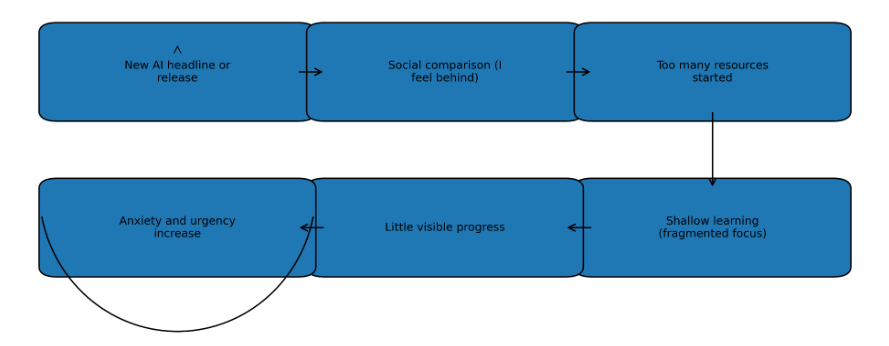
Frequent announcements trigger social comparison, leading learners to start using too many resources at once. Fragmentation prevents depth and visible progress, increasing anxiety, and driving even more consumption. Effort alone worsens the loop; structure breaks it.
Am I Really Behind — or Is the Finish Line Moving?
Technostress research shows that constant exposure to changing tools increases cognitive load and anxiety, even for experienced professionals. The “behind” feeling often reflects comparison to visibility, not competence. Overwhelm isn’t caused by lack of effort; it’s caused by fragmented effort. The cure is not “working harder”; it’s building a system.
A Practical Coping System: CALM Framework
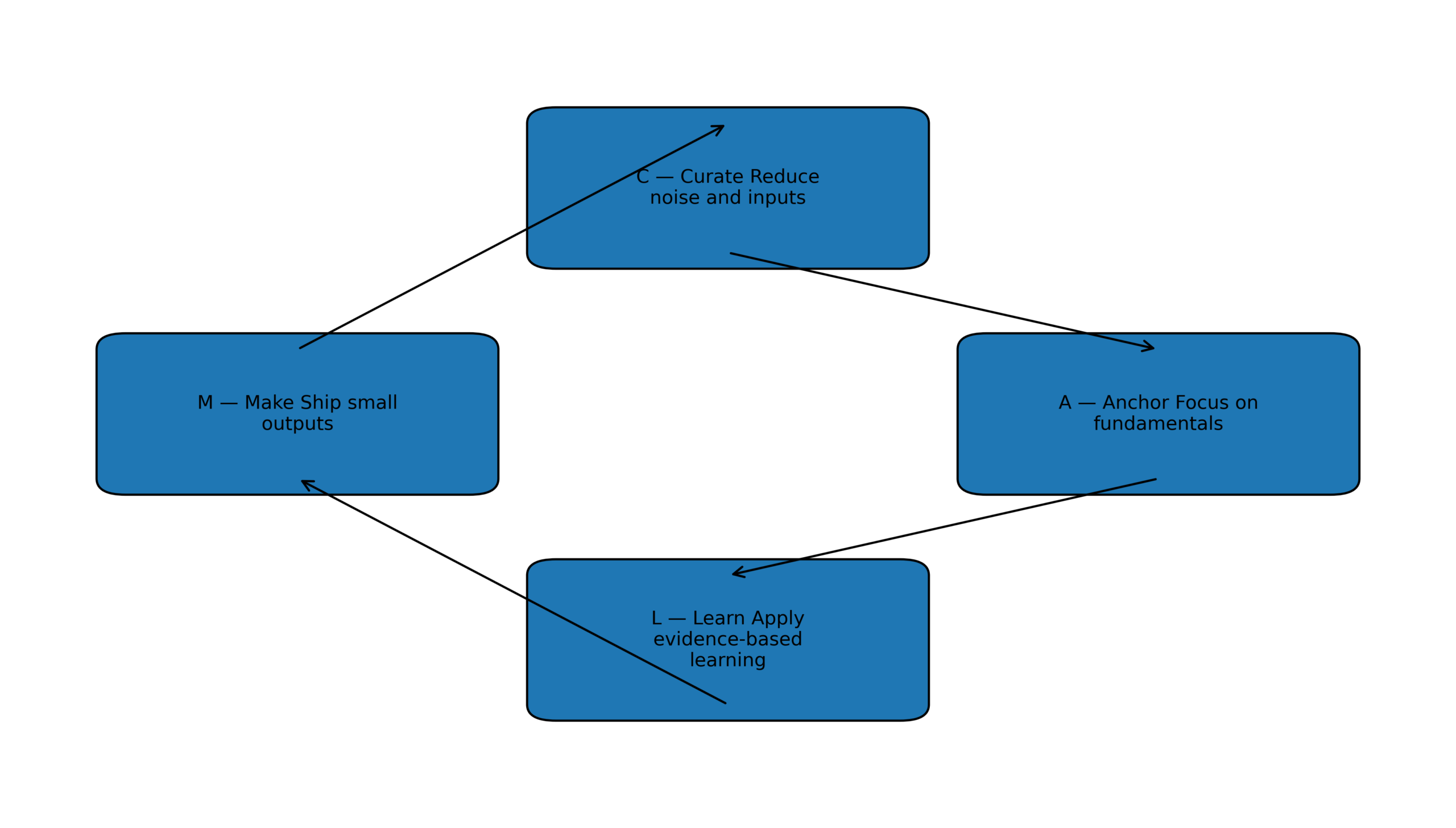
CALM turns learning into repeatable outcomes:
C – Curate (Reduce Noise)
Pick one to two trusted AI sources and stop doom-scrolling AI announcements in the news. Maintain a “Not Now” list for tools and papers you’ll intentionally ignore for 30–90 days.
A – Anchor (Choose an AI “Spine”)
AI is too broad to learn horizontally. Instead, strengthen a stable vertical spine: fundamentals, core machine learning (ML) concepts, LLM system design, deployment realities, and domain context. Trends change; fundamentals compound.
L – Learn (Use Evidence-Based Mechanics)
Learning sticks through retrieval, spacing, and application — not rereading. Implement a simple weekly routine such as reading one targeted piece, writing a recall summary from memory, implementing one small experiment, and writing a short teach-back note.
M – Make (Ship Outcomes)
Confidence comes from proof. Reproduce a baseline, add one improvement, package a small demo, and publish your lessons learned. Output reduces anxiety. Proof creates calm.
Experienced Women Engineers & the AI Overwhelm Loop
Women who entered engineering years ago often navigated gender bias and limited mentorship. Today, age stereotypes layer on top.
Research shows that stereotype threat, an individual’s fear of confirming negative stereotypes about their social group, can reduce confidence and technology use despite capability, while “young-coded” norms signal exclusion. Adaptation to AI depends on systems such as training, job design, and psychological safety — not age itself.
Cross-generational learning can have a major impact in this area. Reverse mentoring combines speed with judgment and supports innovation when designed intentionally.
The Emotional Layer
Impostor feelings arise when your identity is tied to “being the one who knows.”
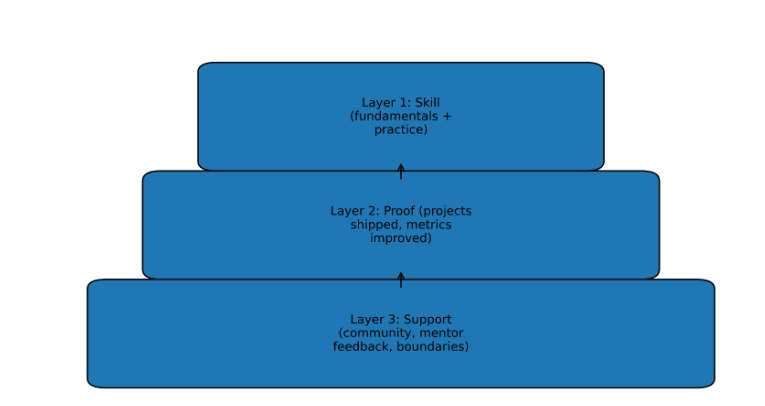
But durable confidence combines skill (learning), proof (artifacts and outcomes), and support (mentors, peers, and boundaries). Most people chase skill alone, but confidence stabilizes when all three are present.
You are not behind, and AI isn’t a subject to finish; it’s a landscape to navigate. Calm, repeatable systems beat panic-learning. And for senior women engineers, your judgment and systems thinking are not obsolete; they are essential to responsible AI adoption.